
Trip Facts
Everest Region
7 Am
14 Days
English, Hindi, Japanese, Urdu
DAY 01: Arrival in Kathmandu and transfer to Hotel.
DAY 02: Drive from Kathmandu to Salleri.
DAY 03: Drive from Salleri to Surke and trek to Phakding.
DAY 04: Trek from Phakding to Namche Bazaar.
DAY 05: Acclimatization Day – Hike to Everest View Hotel.
DAY 06: Trek from Namche Bazaar to Tengboche.
DAY 07: Trek from Tengboche to Dingboche.
DAY 08: Acclimatization Day and Hike to Nangkartshang Hill.
DAY 09: Trek from Dingboche to Lobuche.
DAY 10: Trek to Everest Base Camp and Return to GorakShep.
DAY 11: Hike to Kala Patthar and Trek to Pheriche.
DAY 12: Trek from Pheriche to Namche Bazaar.
DAY 13: Trek from Namche Bazaar to Lukla.
DAY 14: Fly back to kathmandu.
DAY 15: Final departure. Drop to airport as per flight schedule.
Any
- Diverse landscapes: forests, villages, yak pastures, glaciers, and suspension bridges.
- Cultural highlight: Tengboche Monastery; spiritual draw of Everest and Sagarmatha National Park.
- Classic, gradual ascent to EBC (5,380m) & Kala Patthar (5,545m) for altitude acclimatization.
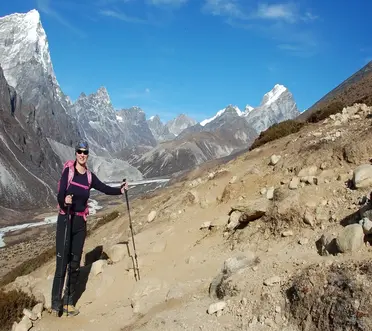
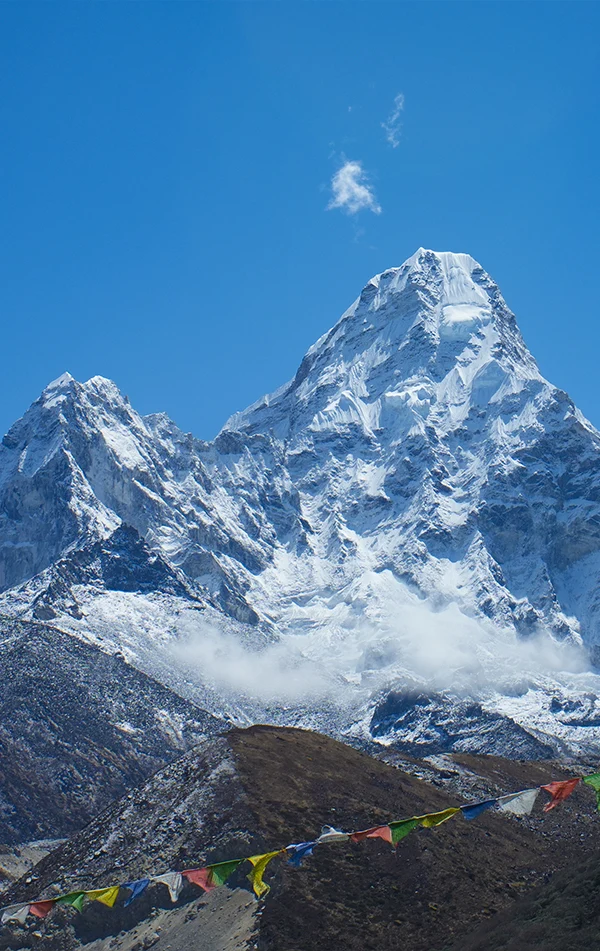
- Close-up views of Everest, Lhotse, Ama Dablam, and other major peaks; rich Sherpa culture.
Pick up from the airport
Drop at the airport
- Required numbers of time Airport pick up and drop off as per your flight schedule (international and domestic). All required transfers in Kathmandu too.
- 2 Night’s accommodation in touristic town of Kathmandu in BB Plan (one can choose budget, standard and deluxe).
- Lukla – Kathmandu/Ramechhap flight ticket.
- Kathmandu – Salleri – Surke by private/shared vechicle.
- Standard tea house (lodge) accommodation during the entire trekking as per mentioned in itinerary.
- Three meals per day (Breakfast, Lunch and Dinner) during the entire trek as per mentioned in itinerary.
- A duffel bag, Trekking Map .
- Trekking pole, Sleeping Bag, Down Jacket, Nepali SIM card (Rental basis, if needed).
- Sagarmatha (Everest) National Park Fee.
- TIMS (Trekker’s Information Manual System) permit.
- An experienced government certified local Trekking Guide.
- Required numbers of highly experienced trekking porters (2:1 ratio).
- Staff’s foods, salary, insurance, accommodation, meals, transportation etc.
- General first Aid Kit.
- A certificate of appreciation (experience certificate) after completing the Trek.
- Farewell Dinner in Kathmandu with cultural program.
- All government taxes and applicable paperwork.
- International Airfare.
- Personal Travel Insurance (essential for high altitude trekking).
- Lunch and Dinner in Kathmandu.
- Personal expenses for bar, laundry, personal shopping, internet usages, hot shower and battery charge during the trek.
- Alcoholic beverage.
- TIPS for Staff.
Introduction
Jiri to Everest Base Camp Trek is an extraordinary trekking route of Everest Base Camp, also called Classic Everest trek is a slightly different route than a popular route of Everest Base Camp Trekking which starts from Jiri by avoiding Kathmandu–Lukla flight and including some amazing less explored places until the route adjoins to the main trail.
The route of Jiri to EBC trekking trail contains massive history as a trail used by Sir Edmund Hillary and Tenzing Norgay Sherpa for their Mt. Everest Summit in May 1953 which is recorded as a first Mt. Everest Expedition all over the world. 21 days Jiri to Everest Base Camp Trek Itinerary is full of quiet walking trails and perfect acclimatization since it begins with very low altitude and not gain too high altitude immediately, the gradual gaining of altitude in every trekking trail is less risk of any kind of high altitude sickness.
Jiri To Everest Base Camp Trek
The trek from Jiri to Everest Base Camp begins by the road transport from Kathmandu to Jiri (appr. 8 hours) from where the trail begins. Trekkers can acclimatize well to the altitude before climbing to the gorgeous Everest viewpoint at Kalapatthar, which, at around 5,500m the highest point of the trek.
You need to be prepared to trek between 5 to 7 hours every day but there’s enough time given to enjoy the views and take photographs. After the trek, it’s a brief flight from Lukla Airport back to Kathmandu.
The names Sir Hillary and Tenzing Norgay Sherpa are familiar to everyone their astonishing feat of being the first one to summit Everest. This fact alone has ensured that trekking to Everest Base Camp is high on the bucket list of great trekkers and people who want to enjoy the elegant environment of the mountains and local peoples of this region.
Scenic Highlights and Spiritual Sites on the Jiri to Everest Trek
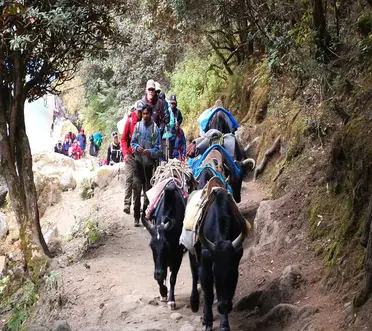
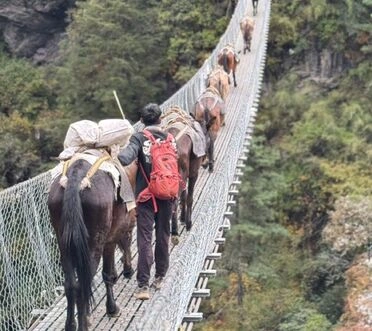
The scenery on this trek is diverse – from alpine forests, Sherpa villages, and yak pastures to glaciers, glacier-fed rivers crossed by amazing suspension bridges, also the bustling town of Namche Bazaar.
One of the highlights for several trekkers on this route might be a visit to the famous Tengboche Monastery, which unfortunately suffered considerable damage during the April 2015 earthquake.
This unique, spiritual power that Everest seems to possess also draws people from all walks of life to the present area, alongside the stunning mountain views, spectacular and sometimes challenging terrain, hence the great thing about the Sagarmatha Park, home of the allusive ounce and panda. The World Wildlife Fund (WWF) included this area within the Sacred Himalayan Landscape initiative, not for nothing.
Trip Features:
- A longer and old route of Everest Base Camp and Kala Patthar Trekking widely used before building of Lukla Airport.
- A perfect way to ascend altitude gradually from low altitudes and up to 5,545 meters at Kala Patthar and 5,380 meters at Everest Base Camp helps to avoid altitude related sickness.
- Opportunity to spy close views of high mountains of Everest region; Mt. Everest (8,848m/2,9021ft), Mt. Lhotse (8,516m/27,932ft), Mt. Makalu (8,481m/27,838ft), Cho Oyu (8,188m/26,864ft), Mt. Nuptse (7,861m/25,784ft), Mt. Thamserku (6,623m/21,723ft), Mt. Amadablam (6,812m/22,343ft) and other snow-capped peaks.
- Explore rich Buddhist culture and charming Sherpa villages with their unique way of living.
Few Things to Know Before Your Trip
- Headlamp with Extra Batteries: Essential for early morning treks or dark trails.
- Sunglasses: UV-protective, high-quality sunglasses to protect against the intense high-altitude sun.
- Sunscreen and Lip Balm: High SPF for sun protection.
- Basic First Aid Kit: Include band-aids, blister treatment, antiseptics, painkillers, altitude sickness medication, and any personal medications.
- Toiletries: Eco-friendly soap, toilet paper, hand sanitizer, and wet wipes.
- Camera and Extra Batteries: Since charging can be costly and unreliable at high altitudes.
Detail Itinerary
DAY 01: Arrival in Kathmandu and transfer to Hotel.
Duration: Approx. 20-30 minutes drive
Distance: Approx. 7 km
Our company representative will welcome you at Tribhuwan International Airport and drive you by private vehicle to hotel. Preparation and briefing about the trip.
Meals:BB/ Full Board
Max Altitude:Kathmandu (1,400 m/4,592 ft)
Accommodation:Hotel
DAY 02: Drive from Kathmandu to Salleri.
Duration: Approx. 9-10 hrs drive
Distance: Approx. 266 km
Early morning we will drive from Kathmandu to Salleri. We will drive through beautiful landscapes, passing terraced fields and traditional villages. On the way we will cross bridges, waterfall, rivers etc. This is perfect trail for those who want to avoid the lukla flight.
Meals:BB/ Full Board
Max Altitude:Salleri (2,370 meters/ 7,775 feet)
Accommodation:Teahouses/ Lodges
DAY 03: Drive from Salleri to Surke and trek to Phakding.
Duration: Approx. 5-6 hrs drive and 4hrs trek.
Distance: Approx. 53 km
After breakfast, we wil drive towards Surke. From here, the trek begins with a 4 hour hike to Phakding. Enjoying views of lush green valleys, pine forests, and a peaceful riverside village known for its lodges, bakeries, and tea houses. You’ll stay overnight at a lodge in Phakding.The trail winds through picturesque villages and terraced fields, offering a glimpse into the daily lives of the local people. Spend the night in Phakding, resting up for the days ahead.
Meals:BB/ Full Board
Max Altitude:Phakding (3,440 m/12,283 ft)
Accommodation:Teahouses/ Lodges
DAY 04: Trek from Phakding to Namche Bazaar.
Duration: Approx. 5-6 hrs trek
Distance: Approx. 7.5 km
After breakfast, your trek begins with uphill along the Dudh Koshi River. The trail offers views of forests, waterfalls, and prayer wheels. You’ll catch your first glimpse of Mt. Thamserku (6,608m).
At Monjo, you’ll enter the Sagarmatha National Park, a UNESCO World Heritage Site. The trail features multiple suspension bridges, including the scenic Tenzing-Hillary Bridge. After that, the climb to Namche Bazaar becomes steeper and more physical demanding.
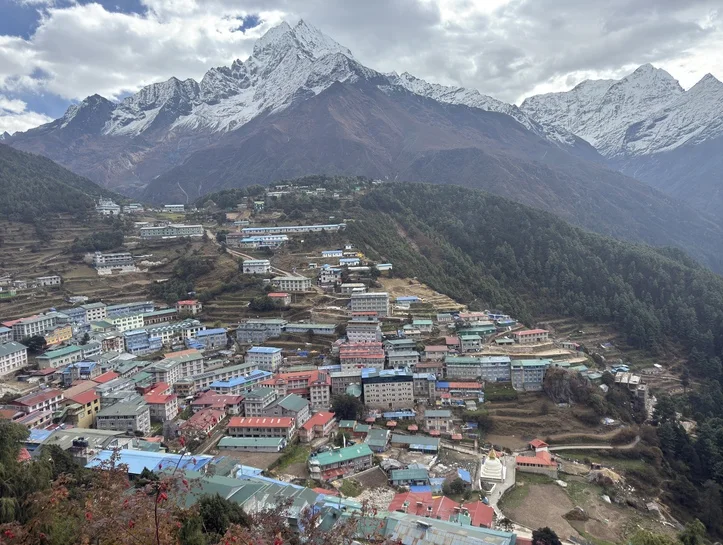
After about 2 hours of uphill trekking, you will reach at Namche Bazaar—a vibrant mountain town where tradition meets modernity. Here, you’ll find shops, cafes, bakeries, and beautiful mountain views. After checking into your lodge, enjoy a short walk around in the evening.
Meals:BB/ Full Board
Max Altitude:Namche Bazaar (3,440 m/11,283 ft)
Accommodation:Teahouses/ Lodges
DAY 05: Acclimatization Day – Hike to Everest View Hotel.
Duration: Approx. 4-5 hrs trek
Distance: Approx. 6.4 km
Today is your first acclimatization day at Namche Bazar. You will rest to prevent from altitude sickness. After breakfast, you’ll hike up to the famous Everest View Hotel (3,800m). From here, enjoy panoramic views of Mount Everest, Ama Dablam, Thamserku, Nuptse, Lhotse, and more.
You can relax with a cup of tea or coffee while soaking in the stunning Himalayan scenery. Later, you’ll return to Namche Bazaar for lunch, rest, and an optional evening stroll.
Meals:BB/ Full Board
Max Altitude:Everest View Hotel (3,800 m/ 12,730 ft)
Accommodation:Teahouses/ Lodges
DAY 06: Trek from Namche Bazaar to Tengboche.
Duration: Approx. 5-6 hrs trek
Distance: Approx. 9 km
After breakfast, the trail leads gently uphill with breathtaking views of Ama Dablam, Everest, Lhotse, Nuptse etc. Along the way, you’ll pass mani stones and prayer flags.
At Sanasa, the trail descends through beautiful pine and rhododendron forests. You’ll cross the Dudh Koshi River on a metal bridge at Phunki Tenga, where you’ll stop for lunch. Afterward, begin a steady uphill climb through forested paths to reach Tengboche.
Here, you’ll visit the Tengboche Monastery, the largest in the Khumbu region, originally built in 1916. After visiting, you’ll check into your lodge for the night.
Meals:BB/ Full Board
Max Altitude:Tengboche (3,867 m/12,683 ft)
Accommodation:Teahouses/ Lodges
DAY 07: Trek from Tengboche to Dingboche.
Duration: Approx. 5-6 hrs trek
Distance: Approx. 9.3 km
The day starts with a short descent through rhododendron forests, passing the Deboche Nunnery and prayer flags. You’ll cross a suspension bridge over the Imja Khola River and then begin a gradual climb through open valleys with excellent views of Ama Dablam.
After lunch in Somare, continue on a gentle uphill trail to reach the high-altitude village of Dingboche. After check-in, enjoy a short acclimatization walk in the area.
Meals:BB/ Full Board
Max Altitude:Dingboche (4,400 m/13,972 ft)
Accommodation:Teahouses/ Lodges
DAY 08: Acclimatization Day and Hike to Nangkartshang Hill.
Duration: Approx. 4-5 hrs trek
Distance: Approx. 4.3 km
Today is your second acclimatization day. After breakfast, you’ll hike to Nangkartshang Hill (approx. 5,000m), Enjoy incredible views of Island Peak, Taboche, Cholatse, Pumori, Ama Dablam, and the Dingboche valley.
After the hike, return to Dingboche and take a proper rest to prepare for higher altitudes in the coming days.
Meals:BB/ Full Board
Max Altitude:Nangkartsang Peak (5,083 m / 16,677 ft)
Accommodation:Teahouses/ Lodges
DAY 09: Trek from Dingboche to Lobuche.
Duration: Approx. 5-6 hrs trek
Distance: Approx. 8.5 km
After breakfast, the trek begins with a gentle uphill walk through an alpine valley. You’ll enjoy views of Taboche and Cholatse before stopping for lunch at Thukla.
After lunch, climb a zigzag trail to reach the Everest Memorial Site, dedicated to climbers who lost their lives on Everest. Afterward, continue trekking for about 1.5 hours on a gentle incline to reach Lobuche, where you’ll stay overnight.
Meals:BB/ Full Board
Max Altitude:Lobuche (4,910 m/ 16,109 ft)
Accommodation:Teahouses/ Lodges
DAY 10: Trek to Everest Base Camp and Return to GorakShep.
Duration: Approx. 7-8 hrs trek
Distance: Approx. 11.2 km
Today is one of the most exciting day of the trek. After an early breakfast, trek through glacial moraines and rocky terrain to reach GorakShep. After checking in and having lunch, continue to Everest Base Camp (5,364m).
The trail follows the Khumbu Glacier ridge, and though it’s challenging, the reward is unforgettable. Reaching base camp is a proud and emotional moment. Take photos, enjoy the view, and then return to GorakShep for the night.
Meals:BB/ Full Board
Max Altitude:Everest Base Camp (5,364m/ 17,598ft), Gorakshep(5,190 m/17,024 ft)
Accommodation:Teahouses/ Lodges
DAY 11: Hike to Kala Patthar and Trek to Pheriche.
Duration: Approx. 7-8 hrs trek
Distance: Approx. 17.1 km
Wake up early and hike to Kala Patthar, best viewpoint for sunrise over Mount Everest, along with views of Nuptse, Lhotse, Pumori, Lingtren, and others. It’s a challenging but rewarding.
After the sunrise view, descend to Gorak Shep for breakfast, then follow the trail down to Thukla. From there, take the trail to Pheriche, a village located in a wide valley with a river and stunning mountain views.
Meals:BB/ Full Board
Max Altitude:Kala Patthar (5,600 m/18,373 ft)
Accommodation:Teahouses/ Lodges
DAY 12: Trek from Pheriche to Namche Bazaar.
Duration: Approx. 7-8 hrs trek
Distance: Approx. 19.4 km
Today’s trail descends gradually through the open valley and passes Deboche before reaching Tengboche. From there, you’ll descend steeply to Phunki Tenga for lunch.
After lunch, make a final uphill climb through forests, reaching Sanasa. The trail then becomes easier and mostly flat as you continue to Namche Bazaar.
Meals:BB/ Full Board
Max Altitude:Namche Bazaar (3,440 m/11,283 ft)
Accommodation:Teahouses/ Lodges
DAY 13: Trek from Namche Bazaar to Lukla.
Duration: Approx. 7-8 hrs trek
Distance: Approx. 19.5 km
This is your final day of trekking. The trail mostly goes downhill and flat, passing through villages, forests, and suspension bridges. After reaching Lukla, celebrate with a farewell party for the porters who helped to make your trek successful
Meals:BB/ Full Board
Max Altitude:Lukla (2,800 m/9,184 ft)
Accommodation:Teahouses/ Lodges
DAY 14: Fly back to kathmandu.
Duration: Lukla to Kathmandu flight (30minute) Lukla to Manthali (20minute) flight and Manthali Airport to Kathmandu (4hrs drive).
Take a morning flight back to Kathmandu. Your guide will transfer you to your hotel. In the evening, enjoy a farewell dinner at a traditional Nepali restaurant, marking the end of your unforgettable Everest Base Camp Trek.
Meals:BB/ Full Board
Max Altitude:Kathmandu (1,300 m/ 4,592 ft)
Accommodation:Hotel
DAY 15: Final departure. Drop to airport as per flight schedule.
Duration: Approx. 20-30 minutes drive
Distance: Approx. 7 km
Our representative will drop you at International Airport as per your flight schedule.
Equipment Checklist
Embarking on the Jiri to Everest Base Camp Trek is a thrilling adventure that requires meticulous preparation. Ensuring you have the right gear can make the difference between a comfortable journey and a challenging one. In this guide, we’ll walk you through the essential equipment needed for the trek, from clothing layers to personal items. Whether you’re a seasoned trekker or a first-timer, our comprehensive packing list will help you get ready for the adventure of a lifetime.”
1. Clothing
Base Layers: Thermal tops and bottoms for warmth.
Mid Layers: Fleece jacket for insulation.
Outer Layer: Insulated down jacket (recommended for high altitudes).
Rainproof/Windproof Jacket and Pants: Essential for unpredictable weather.
Trekking Pants: Lightweight, quick-drying pants for daytime trekking.
Warm Hat and Sun Hat: A warm beanie for cold weather, and a wide-brimmed hat or cap for sun protection.
Gloves: Waterproof insulated gloves and lightweight inner gloves.
Socks: Wool socks for cold weather and moisture-wicking socks for trekking
Gaiters: To keep mud, snow, and debris out of your boots.
2. Footwear
Hiking Boots: Sturdy, waterproof boots with good ankle support.
Camp Shoes/Sandals: For comfort when relaxing in the tea houses or lodges.
3. Sleeping Gear
Sleeping Bag: Rated for -10°C to -20°C to withstand cold nights in higher altitudes.
Sleeping Bag Liner: Adds warmth and keeps your sleeping bag clean.
4. Backpack and Accessories
Daypack (25-30 liters): For carrying essentials like water, snacks, and layers.
Duffel Bag: Large, durable bag for porters to carry; waterproof covers are recommended.
Rain Cover: For protecting your daypack from rain.
Trekking Poles: Helpful for stability and reducing stress on knees.
5. Hydration and Nutrition
Water Bottles and/or Hydration Bladder: With at least 2-3 liters capacity.
Water Purification Tablets or Filter: To treat water on the trail.
Snacks: High-energy snacks like energy bars, nuts, and chocolates.
6. Personal and Miscellaneous Items
Headlamp with Extra Batteries: Essential for early morning treks or dark trails.
Sunglasses: UV-protective, high-quality sunglasses to protect against the intense high-altitude sun.
Sunscreen and Lip Balm: High SPF for sun protection.
Basic First Aid Kit: Include band-aids, blister treatment, antiseptics, painkillers, altitude sickness medication, and any personal medications.
Toiletries: Eco-friendly soap, toilet paper, hand sanitizer, and wet wipes.
Camera and Extra Batteries: Since charging can be costly and unreliable at high altitudes.
7. Documents and Money
Passport and Permits: Passport, visa,TIMS card, and entry permit.
Cash: ATMs are not reliable in the mountains, so bring enough Nepali cash for personal expenses.
Frequently Asked Questions
The trekking route of Jiri to Everest Base Camp Trek is considered as a strenuous trek. Although we ascend up to Kala Patthar(5,600 m/18,373 ft) It doesn’t require any trekking experience. In the favorable season anyone enthusiastic with a physically fit body who can do at least 5-6 hrs walk daily can trek to Jiri to EBC trek.
It’s the classic trekking route taken by Sir Edmund Hillary and Tenzing Norgay in 1953. Starting from Jiri, it offers a long, scenic, culturally rich journey to Everest Base Camp without flying to Lukla.
Fewer crowds
Authentic Sherpa and hill culture
Beautiful landscapes, forests, and villages
Gradual altitude gain
Historically significant route (Hillary’s path)
Yes, previous multi-day trekking experience is recommended due to the trek’s length and physical demands.
Yes. Even with a gradual ascent, proper acclimatization days in Namche Bazaar and Dingboche are essential.
You will need:
Sagarmatha National Park Permit
Khumbu Pasang Lhamu Rural Municipality Permit
Expect tea houses and lodges with simple rooms, shared or private options, and basic but warm meals. Jiri-side villages offer more traditional, rustic stays.
Most trekkers take a public bus or private jeep from Kathmandu to Jiri, which takes around 7–9 hours.
Yes. It should cover:
Trekking up to 6,000 m
Medical evacuation
High-altitude rescue
All the equipment/accessories required for trekking will be arranged for you.You will have to pay the amount for equipment. If you personally want to manage any equipment by yourself it’s fine. We have created The Ultimate Trekking Checklist page for your help as It is always better to carry the essential gears and accessories.
Yes!! The Internet is accessible during whole Everest Region Trek. You can access the 3G network on mobile phones. The mobile internet is fast enough to browse and even make video calls. You will get continous signal during the whole trek but there will be certain dark spots along the trek where connection may drop. There are limited wifi hotspots during the trek which will charge for usage only some will let you use it for free. So, for internet access we recommend you to buy a SIM and use 3G.
Yes!! You can charge mobile phones and camera batteries during the trek. At most of the places you will get to charge for free but at some places you have to pay some amount to charge. Remember that It is always better to bring your power bank with you which will be helpful.
Gokyo to EBC via Cho la pass is the trek on one of the highest pass in the Khumbu region. The highest altitude you will ascend up to during this trek is Kala Patthar (5,545m/18,187ft). We have created Itinerary in proportion to proper acclimatization so normally we don’t need oxygen on this trek. In case of altitude sickness we will descend immediately. If any altitude sickness symptoms are seen then we provide Diamox as a medication.
Qualified, well experienced, knowledgeable and reliable trekking leaders who have been working in this field professionally for more than a decade will guide you toward the destination and back. You are in safe hands with us, so don’t worry about trekking guides.
The prime time for Jiri to Everest Base Camp Trek is during Spring (March, April and May) and Autumn (October and November). During these seasons the weather will be clear, flowers will bloom on the way, the charm of the atmosphere can be felt by the heart, magnificent views of the Himalayas can be seen and you can escape the crowd and enjoy the pleasure of trekking.
Didn't we answer your questions? Visit our help center.
Cancellations
Full refund if cancelled 15 days prior; 50% refund if cancelled 8–14 days prior; no refund if cancelled within 7 days due to finalized arrangements. Cancellations to be made in writing (email/message); in cases of severe weather, natural events, or government restrictions, tours may be rescheduled/credited for future use; travel insurance is recommended.
Read more terms & conditions