


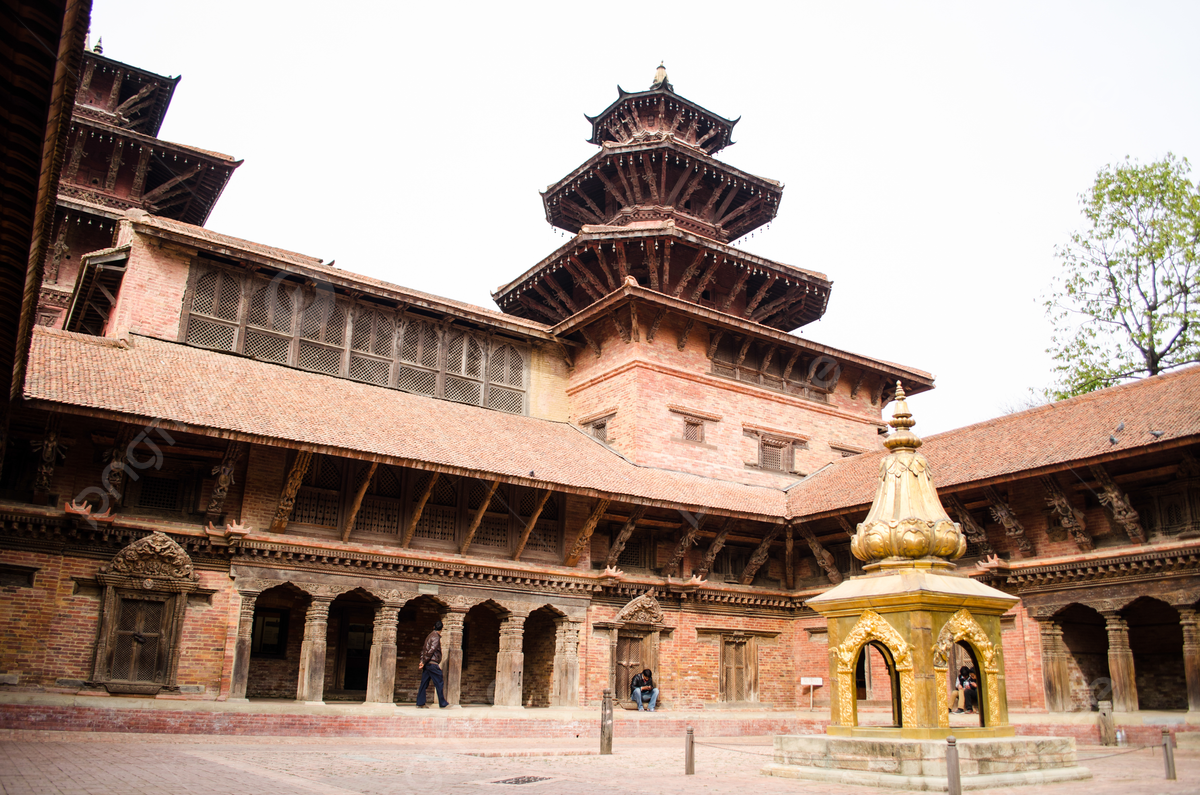
A Journey Through Patan - The City of Beauty
Lalitpur
9 AM, 3 PM
3 hour
English, Hindi, Japanese, Urdu
The tour is non-strenuous and involves some walking, but is suitable for most people. Comfortable shoes are highly recommended.
1-15
- Patan: a living center of Newar artistry in metalwork, carving, and sacred statue-making.
- City layout follows ancient Vastu principles, with Hindu and Buddhist sites harmoniously coexisting.
- Rich architectural evolution from Licchavi to Malla eras, visible in detailed wood and metal craftsmanship.
- A cultural walk revealing deep layers of history, royal patronage, and spiritual traditions.
📍 At the south gate of Patan Durbar Square - right by the idol of God Ganesha.
Bagalamukhi Temple
Entrance Fees:
Patan Durbar Square: Rs 1000 (includes Patan Museum)
Golden Temple: Rs 100
Offerings (optional): As per your wish.
- Knowledgeable local guide sharing stories, history, and cultural insights
- Walking tour of main attractions, alleys, and courtyards of Patan
- Opportunity to explore temples, squares, and traditional markets
- Insider tips about local culture, food, and hidden gems
- Transportation to or from the meeting point
- Entrance fees to certain paid sites (if any)
- Food, drinks, and personal expenses
- Tips for the guide (optional but appreciated)
Description
Walk through the ageless streets of Patan (also called Lalitpur), where Newar skill meets old-world city planning. Back when it was a bustling seat of kings, this place grew into a real-life collection of Nepal’s middle-era culture – art, buildings, faith – all still breathing today. Lalitpur’s name actually means “City of Beauty” – which fits, seeing how each temple, palace, or open square pulses with the creative skill passed down through countless Newar craftspersons.
Patan Durbar Square, listed by UNESCO back in 1979, holds some of the best examples of carved stone, timber work, and metalcraft across South Asia. Its buildings mix Hindu and Buddhist styles so closely they seem to grow from the same root – this balance shapes how the Kathmandu Valley looks and feels culturally. Architectural and Historical Highlights.
Patan Durbar Square:-
Patan Durbar Square sits right in the heart of the ancient town – a former palace for the Malla rulers (1300s to 1700s), the ones who ruled Lalitpur.
The square’s ringed by three key courtyards – Mul Chowk, Sundari Chowk, along with Keshav Narayan Chowk – all packed with detailed wooden designs, shiny metal figures, plus stone spouts called hiti.
Key structures include:
Krishna Temple (1637 AD) – Erected under King Siddhi Narasingha Malla using pure stone, this North Indian–style shikhara structure holds 21 towers while detailed engravings show scenes from the Mahabharata along with moments out of the Ramayana. Bhimsen Temple – Honors the deity tied to power and trade, featuring carved wood supports alongside intricate window patterns.
Vishwanath Temple – Built like the Shiva shrine in Varanasi, with stone elephants standing guard as symbols of protection; intricate sculptures depict intimacy, tied to creation and the flow of existence.
Patan Museum
Was once a king’s home, but these days it holds amazing carvings in metal, timber, and rock from way back during the Licchavi era along with the time of the Mallas.
Ratnakar Mahavihar (Kumari House)
This old Buddhist temple, also known as a Bahāl, serves as home to Patan’s Kumari – a little girl seen by many as the human form of the deity Taleju.
Ratnakar Mahavihal follows classic Newar layout, built around a central open yard where wood-carved toranas stand above doorways while ornate windows add flair. Its outer walls display stunning metal panels hammered into artful shapes along with delicate mesh patterns – proof of Patan’s skilled handiwork passed down through generations.
This place gives you an uncommon look at how old customs – royal ones, faith practices, together with community habits – molded the Valley’s deep cultural roots.
Hiranyavarna Mahavihar – The Golden Temple
Among Patan’s most stunning buildings stands the Golden Temple – also known as Hiranyavarna Mahavihar – a structure from the 1100s tied to King Bhaskara Deva.
Even though it’s a Buddhist temple, the design blends in Hindu features without effort – showing just how mixed Nepal’s religions really are. The temple yard bursts with shiny bronze carvings, stone lions standing guard, spinning prayer wheels, also tiny dome-shaped shrines. Inside the central hall sits a glowing statue of Buddha Shakyamuni, whereas the triple-layered rooftop shines through copper sheets hammered into bold designs.
The skill shown here – especially in the intricate metal details along with the tiered roof design – hits the peak of Newar metal craft.
Kumbeshwor Temple – The Towering Pagoda of Lord Shiva
The Kumbeshwor Temple, linked to Lord Shiva, is among Nepal’s most ancient plus tallest pagoda-style sites – thought to originate from the 1300s under King Jayasthiti Malla. There are just two temples like this in Kathmandu Valley – one’s here, the other’s Nyatapola over in Bhaktapur.
The temple follows old Newar design with a tiered roof, supported by wooden beams carved into gods and legendary beasts – these pieces are linked through ornate joints instead of nails; above rises a golden spire while sheets of copper cover the top, hammered flat using age-old methods passed down through generations.
In the heart of it sits a revered Shiva lingam along with a pool – locals say its waters link directly to Gosainkunda, an important mountain pilgrimage spot up in the Himalayas.
Bagalamukhi Temple – The Power of Shakti
Nestled toward the south edge of Patan Durbar Square, this shrine honors the goddess Bagalamukhi – part of a group known as the Ten Mahavidyas, powerful female figures in Tantric Hindu belief.
A small but meaningful building, it highlights local brick-and-wood work through ornate gateways and detailed entry surrounds. The Bagalamukhi Temple shows how Tantric styles blended with local building forms in Kathmandu, using shapes, symbols, or layout to reflect spiritual power.
Recommendation
We recommend booking your Free Walking Tour of Patan in advance, as group sizes are limited. Please wear comfortable walking shoes and bring water, sunscreen, and a hat, as the tour involves exploring Patan’s narrow lanes and open courtyards. Arrive a few minutes early at the meeting point to ensure a smooth start, and don’t forget your camera — Patan’s ancient temples, art-filled squares, and traditional Newari architecture offer endless photo opportunities.
Frequently Asked Questions
It is approximately 3 hours long, making it a great half-day activity.
At the south gate of Patan Durbar Square – right by the idol of God Ganesha.
“Certainly. Please provide the address of your hotel, and I will arrange to pick you up from there.”
The tour is non-strenuous and involves some walking, but is suitable for most people. Comfortable shoes are highly recommended.
Comfortable walking shoes. Sunscreen plus a cap, also loose clothes to block the sun. A water bottle . A phone or maybe a camera. Cash just in case you need to pay to get in somewhere or grab a keepsake. outfits picked based on how hot or cold it is outside.
Free walking trips run on a “give-what-it-was-worth-to-you” idea – your contribution goes to the guide depending on how valuable the experience seemed. Instead of fixed prices, guests hand over cash afterward according to their satisfaction level. Wondering what to give as a tip? Though it’s not required, folks usually appreciate a reasonable amount – particularly if the experience was solid. The exact number shifts from place to place; still, many go with roughly 10 to 20 bucks per traveler, shaped by how pricey things are nearby.
Guides may be able to adjust the schedule to accommodate your interests.
“To guarantee your preferred dates & time, we recommend booking your tour in advance, as spaces are limited.”
Didn't we answer your questions? Visit our help center.
Cancellations
Full refund if cancelled 15 days prior; 50% refund if cancelled 8–14 days prior; no refund if cancelled within 7 days due to finalized arrangements. Cancellations to be made in writing (email/message); in cases of severe weather, natural events, or government restrictions, tours may be rescheduled/credited for future use; travel insurance is recommended.
Read more terms & conditions