
Trip Facts
EVEREST REGION
7 Am
18 Days
English, Hindi, Japanese,Urdu
DAY 01: Arrival in Kathmandu and transfer to Hotel.
DAY 02: Fly to Lukla and Trek to Phakding.
DAY 03: Trek from Phakding to Namche Bazaar.
DAY 04: Rest day at Namche Bazaar for acclimatization, excursion around the places and hike to everest view hotel.
DAY 05: Trek from Namche Bazaar to Tengboche.
DAY 06: Trek from Tengboche to Dingboche.
DAY 07: Trek from Dingbouche to Chhukung.
DAY 08: Chhukung to Kongma La Pass to Lobuche.
DAY 09: Lobuche to Gorak shep then trek to Everest Base Camp and Return to Gorak Shep.
DAY 10: Trek from Gorak Shep to Dzongla.
DAY 11: Trek from Dzongla to Thangnak via Cho La Pass.
DAY 12: Trek from Thangnak to Gokyo Lake.
DAY 13: Gokyo Ri Hike and Exploration Day.
DAY 14: Gokyo to Lungden via Renjo La Pass.
DAY 15: Lungden to Namche Bazaar.
DAY 16: Trek from Namche Bazar to Lukla.
DAY 17: Fly Back to Kathmandu.
DAY 18: Final departure. Drop to Tribhuvan Internationa Airport as per flight schedule.
1-20
- The most demanding Everest route; crosses three high passes: Renjo La, Cho La, Kongma La
- Visits key sites: Gokyo Valley & Lakes, Everest Base Camp, Kala Patthar
- Features unique Sherpa culture at Tengboche Monastery and traditional villages
- Rich biodiversity: diverse flora, fauna, and rare species like snow leopards and red pandas
Pick up from airport
Drop back at the airport
- Required numbers of time Airport pick up and drop off as per your flight schedule (international and domestic). All required transfers in Kathmandu too.
- 2 Night’s accommodation in touristic town of Kathmandu in BB Plan (one can choose budget, standard and deluxe).
- Kathmandu/Ramechhap – Lukla – Kathmandu/Ramechhap both way flight ticket.
- Standard tea house (lodge) accommodation during the entire trekking as per mentioned in itinerary.
- Three meals per day (Breakfast, Lunch and Dinner) during the entire trek as per mentioned in itinerary.
- A duffel bag, Trekking Map .
- Trekking pole, Sleeping Bag, Down Jacket, Nepali SIM card (Rental basis, if needed).
- Sagarmatha (Everest) National Park Fee.
- TIMS (Trekker’s Information Manual System) permit.
- An experienced government certified local Trekking Guide.
- Required numbers of highly experienced trekking porters (2:1 ratio).
- Staff’s foods, salary, insurance, accommodation, meals, transportation etc.
- General first Aid Kit.
- A certificate of appreciation (experience certificate) after completing the Trek.
- Farewell Dinner in Kathmandu with cultural program.
- All government taxes and applicable paperwork.
- International Airfare.
- Personal Travel Insurance (essential for high altitude trekking).
- Lunch and Dinner in Kathmandu.
- Personal expenses for bar, laundry, personal shopping, internet usages, hot shower and battery charge during the trek.
- Alcoholic beverage.
- TIPS for Staff.
Overview
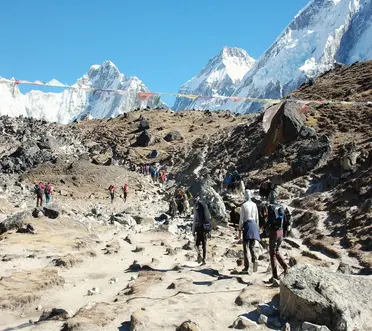
The Everest Three Passes Trek is a challenging and rewarding trek in the Khumbu region of Nepal that takes you over the three highest passes in the area: Kongma La Pass (5,535 meters/18,159 feet), Cho La Pass (5,420 meters/17,782 feet), and Renjo La Pass (5,340 meters/17,520 feet). Along the way, you will also climb to the top of Kalapatthar (5,545 meters/18,187 feet) for breathtaking views of Mount Everest and the surrounding peaks. This trek offers a unique opportunity to explore the lesser-known areas of the Khumbu region, including the Nangpa La valley, the Sherpa village of Marlung, and the Monastery village of Thame. With its diverse landscapes, rich culture, and unparalleled views of the Himalayas, the Everest Three Passes Trek is a dream come true for adventurous trekkers.
Everest Three Pass Trek Overview
The trek begins with a scenic flight from Kathmandu to Lukla and continues through the beautiful Phakding village and the historical town of Namche Bazaar. From there, the route winds its way through the region in a clockwise direction, crossing the three high passes of Renjo La (5,370 meters), Cho La (5,420 meters), and Kongmala La (5,545 meters) before reaching the summit of Kalapatthar (5,545 meters/18,187 feet) and Gokyo Ri (5,483 meters/17,984 feet).
Along the way, trekkers will also visit the Gokyo Valley and the stunning Gokyo lakes, as well as the Ngozumpa Glacier. The stunning Gokyo valley is seen like a piece of heaven and the crystalline Gokyo lakes along with Ngozumpa Glacier appears to be magnificent. The special thing about this trek is we can unfold the panorama of the whole Khumbu region. Each small settlement in Khumbu region itself is the most captivating thing and the majestic beauty is unparallel with any other area.
Culture, Wildlife & Ultimate Adventure
The trek offers a unique opportunity to explore the diverse cultures and traditions of the Khumbu region, as well as its rich wildlife, including over 118 species of birds, endangered animals such as the Red Panda and Snow Leopard, and the Himalayan Tahr, Ghoral, Serow, and Himalayan black bear.
Trekkers will also have the chance to experience the warm hospitality of the local communities and to learn about their ancient Tibetan crafts and traditional housing and clothing. With its combination of stunning mountain views, rich culture, and diverse wildlife, the Everest Three Passes Trek is the ultimate adventure for trekkers in search of the ultimate trekking experience.
The Everest Three Passes Trek is one of the most challenging routes in the Everest region, crossing Renjo La, Cho La, and Kongma La passes. This trek requires essential gear for high altitudes, varying weather, and rough terrain. Here’s a comprehensive equipment list to prepare for this rigorous adventure:
1. Clothing
Base Layers: Thermal tops and bottoms for insulation.
Mid Layers: Fleece jacket or a synthetic layer for added warmth.
Outer Layer: Insulated down jacket for extreme cold at high passes.
Waterproof Jacket and Pants: Lightweight, breathable, and waterproof outer layer.
Trekking Pants: Quick-drying pants for daytime hikes.
Warm Hat, Buff, and Gloves: Warm beanie, neck gaiter, and waterproof gloves with liners.
Socks: Thermal and moisture-wicking socks; consider bringing extra pairs.
2. Footwear
High-Quality Hiking Boots: Sturdy, waterproof boots with good ankle support and grip for snowy or rocky sections.
Camp Shoes: Lightweight sandals or slippers for camp comfort.
3. Sleeping Gear
Sleeping Bag: Rated for -15°C to -20°C, as temperatures can drop significantly at night.
Sleeping Bag Liner: Adds warmth and keeps your bag clean.
4. Backpack and Accessories
Daypack (30-40 liters): To carry essentials like water, snacks, camera, and clothing layers.
Duffel Bag: Durable and waterproof for the gear carried by porters.
Trekking Poles: Essential for steep ascents, descents, and crossing passes.
Rain Cover for Backpack: To protect against unexpected rain or snow.
5. Hydration and Nutrition
Water Bottles and/or Hydration Bladder: At least 2-3 liters capacity.
Water Purification: Tablets or filter, as potable water may not always be available.
High-Calorie Snacks: Energy bars, trail mix, chocolate, and dried fruits.
6. Personal Essentials
Headlamp with Extra Batteries: Necessary for early mornings or late evenings.
Sunglasses: High UV protection to prevent snow blindness.
Sunscreen and Lip Balm: SPF 50+ for sun protection at high altitudes.
First Aid Kit: Include altitude sickness medication, band-aids, blister care, pain relievers, and any personal medications.
Toiletries: Biodegradable soap, toilet paper, hand sanitizer, and wet wipes.
7. Navigation and Safety Gear
Map and Compass or GPS Device: For navigation, especially if trekking independently.
Whistle: For emergency signaling.
Multi-Tool or Knife: Useful for various repairs and emergencies.
8. Documents and Money
Passport and Permits: Passport, visa,TIMS card, and Sagarmatha National Park entry permit.
Cash: ATMs are not reliable in the mountains, so bring enough Nepali cash for personal expenses.
Detail Itinerary
DAY 01: Arrival in Kathmandu and transfer to Hotel.
Duration: Approx. 20-30 minutes drive
Distance: 7 km
Our company representative will welcome you at Tribhuwan International Airport and drive you by private vehicle to hotel. Preparation and briefing about the trip.
Meals:BB/ Full Board
Max Altitude:Kathmandu (1,400 m/4,592 ft)
Accommodation:Hotel
DAY 02: Fly to Lukla and Trek to Phakding.
Duration: Kathmandu to Lukla flight (30 minute) Kathmandu to Manthali Airport (4 hrs drive) & Manthali to Lukla (20 minute flight)
You will either take a direct flight from Kathmandu to Lukla (30 minute flight) or drive about 4 hours to Manthali Airport, followed by a 20-minute flight to Lukla. After landing at the Tenzing-Hillary Airport, the trek begins with a gentle downhill walk.
You will pass through Cheplung and Ghat villages, enjoying views of lush green valleys, pine forests, and the beautiful Dudh Koshi River. This region follows Buddhism, so you’ll see prayer flags, mani walls, and stupas along the way. After around 3–4 hours of walking, you’ll reach Phakding, a peaceful riverside village known for its lodges, bakeries, and tea houses. You’ll stay overnight at a lodge in Phakding.
Meals:BB/ Full Board
Max Altitude:Lukla (2,800 m/9,184 ft)
Accommodation:Teahouses/ Lodges
DAY 03: Trek from Phakding to Namche Bazaar.
Duration: Approx. 5-6 hrs trek
Distance: Approx. 7.5 km
After breakfast, your trek begins with uphill along the Dudh Koshi River. The trail offers views of forests, waterfalls, and prayer wheels. You’ll catch your first glimpse of Mt. Thamserku (6,608m).
At Monjo, you’ll enter the Sagarmatha National Park, a UNESCO World Heritage Site. The trail features multiple suspension bridges, including the scenic Tenzing-Hillary Bridge. After that, the climb to Namche Bazaar becomes steeper and more physical demanding.
After about 2 hours of uphill trekking, you will reach at Namche Bazaar—a vibrant mountain town where tradition meets modernity. Here, you’ll find shops, cafes, bakeries, and beautiful mountain views. After checking into your lodge, enjoy a short walk around in the evening.
Meals:BB/ Full Board
Max Altitude:Namche Bazaar (3,440 m/11,283 ft)
Accommodation:Teahouses/ Lodges
DAY 04: Rest day at Namche Bazaar for acclimatization, excursion around the places and hike to everest view hotel.
Duration: Approx.4-5hrs trek
Distance: Approx.6.4 km
Today is your first acclimatization day at Namche Bazar. You will rest to prevent from altitude sickness. After breakfast, you’ll hike up to the famous Everest View Hotel (3,800m). From here, enjoy panoramic views of Mount Everest, Ama Dablam, Thamserku, Nuptse, Lhotse, and more.
You can relax with a cup of tea or coffee while soaking in the stunning Himalayan scenery. Later, you’ll return to Namche Bazaar for lunch, rest, and an optional evening stroll.
Meals:BB/ Full Board
Max Altitude:Everest View Hotel (3,800 m/12,729 ft)
Accommodation:Teahouses/ Lodges
DAY 05: Trek from Namche Bazaar to Tengboche.
Duration: Approx. 5-6 hrs trek
Distance: Approx. 9 km
After breakfast, the trail leads gently uphill with breathtaking views of Ama Dablam, Everest, Lhotse, Nuptse etc. Along the way, you’ll pass mani stones and prayer flags.
At Sanasa, the trail descends through beautiful pine and rhododendron forests. You’ll cross the Dudh Koshi River on a metal bridge at Phunki Tenga, where you’ll stop for lunch. Afterward, begin a steady uphill climb through forested paths to reach Tengboche.
Here, you’ll visit the Tengboche Monastery, the largest in the Khumbu region, originally built in 1916. After visiting, you’ll check into your lodge for the night.
Meals:BB/ Full Board
Max Altitude:Tengboche (3,867 m/12,683 ft)
Accommodation:Teahouses/ Lodges
DAY 06: Trek from Tengboche to Dingboche.
Duration: Approx. 5-6 hrs trek
Distance: Approx. 9.3 km
The day starts with a short descent through rhododendron forests, passing the Deboche Nunnery and prayer flags. You’ll cross a suspension bridge over the Imja Khola River and then begin a gradual climb through open valleys with excellent views of Ama Dablam.
After lunch in Somare, continue on a gentle uphill trail to reach the high-altitude village of Dingboche. After check-in, enjoy a short acclimatization walk in the area.
Meals:BB/ Full Board
Max Altitude:Dingboche (4,260cm/13,972 ft)
Accommodation:Teahouses/ Lodges
DAY 07: Trek from Dingbouche to Chhukung.
Duration: Approx. 2-3 hrs trek
Distance: Approx. 5 km
After breakfast, you will start the trek. The trail is mostly gentle uphill through an open valley. Chhukung offers beautiful views of Ama Dablam, Island Peak, and Lhotse.
Meals:BB/ Full Board
Max Altitude:Chhukung(4,730 m/ 15,518 ft)
Accommodation:Teahouses/ Lodges
DAY 08: Chhukung to Kongma La Pass to Lobuche.
Duration: Approx. 8-10 hrs trek
Distance: Approx. 11 km
After an early morning breakfast, we begin our trek with a packed lunch. The trail climbs steadily uphill through an open valley. From Chhukung, you’ll enjoy beautiful views of Ama Dablam, Island Peak, and Lhotse. The path continues uphill toward the challenging Kongma La Pass. Upon reaching the top, you’ll be rewarded with breathtaking views of Makalu, Lhotse, Nuptse, Ama Dablam, and surrounding peaks. After the pass, the trail descends steeply, and the final section involves walking across a glacier to reach Lobuche.
Meals:BB/ Full Board
Max Altitude:Kongma La Pass (5,535 m/18,159 ft)
Accommodation:Teahouses/ Lodges
DAY 09: Lobuche to Gorak shep then trek to Everest Base Camp and Return to Gorak Shep.
Duration: Approx. 7-8 hrs trek
Distance: Approx. 11.2 km
Today is also one of the most exciting day of the trek. After an early breakfast, trek through glacial moraines and rocky terrain to reach GorakShep. After checking in and having lunch, continue to Everest Base Camp (5,364m).
The trail follows the Khumbu Glacier ridge, and though it’s challenging, the reward is unforgettable. Reaching base camp is a proud and emotional moment. Take photos, enjoy the view, and then return to GorakShep for the night.
Meals:BB/ Full Board
Max Altitude:Everest Base Camp (5,364 m / 17,598 ft), Gorakshep(5,190 m/17,024 ft)
Accommodation:Teahouses/ Lodges
DAY 10: Trek from Gorak Shep to Dzongla.
Duration: Approx. 4-5 hrs trek
Distance: Approx. 10.5 km
After breakfast, we start our trek with a gradual descent from Lobuche. Shortly after, we leave the main Everest Base Camp trail and head toward Dzongla. On the way, you’ll enjoy stunning views of Ama Dablam, Cholatse, and other nearby peaks. The trail is peaceful and less crowded.
Meals:BB/ Full Board
Max Altitude:Dzongla (4,830 m/ 15,850 ft)
Accommodation:Teahouses/ Lodges
DAY 11: Trek from Dzongla to Thangnak via Cho La Pass.
Duration: Approx. 6-7 hrs trek
Distance: Approx. 16 km
Today, after an early breakfast, the trek begins with a gradual uphill climb that gets steeper as you approach the Cho La Pass. The final stretch to the pass involves walking on an icy slope. Once at the top, you’ll take in panoramic views of snow-covered peaks. The trail then descends steeply through a rocky path to reach Thangnak, a small settlement on the other side of the pass.
Meals:BB/ Full Board
Max Altitude:Thangnak via Cho la Pass (5,420 m/ 17,783 ft)
Accommodation:Teahouses/ Lodges
DAY 12: Trek from Thangnak to Gokyo Lake.
Duration: Approx. 5-6 hrs trek
Distance: Approx. 8 km
After breakfast, we begin our trek with a gentle descent through a scenic landscape. Along the way, you’ll have incredible views of Mount Everest, Cho Oyu, and Gokyo Ri. As you approach Gokyo Lake, you’ll be welcomed by its serene beauty, surrounded by mountains. This lake is considered sacred and is known for its pristine, turquoise waters.
Meals:BB/ Full Board
Max Altitude:Gokyo lake (4,750 m/ 15,584 ft)
Accommodation:Teahouses/ Lodges
DAY 13: Gokyo Ri Hike and Exploration Day.
After morning breakfast, we hike up to Gokyo Ri, a popular viewpoint. The trail is steep but rewarding. From the summit, you’ll witness breathtaking panoramic views of Mount Everest, Lhotse, Makalu, Cho Oyu, and the stunning Gokyo Lakes below. After spending time at the top, we descend the same way and relax at Gokyo. You’ll have time to explore the surroundings in the evening.
Meals:BB/ Full Board
Max Altitude:Gokyo Ri (5,357 m / 17,575 ft)
Accommodation:Teahouses/ Lodges
DAY 14: Gokyo to Lungden via Renjo La Pass.
Duration: Approx. 6-7 hrs trek
Distance: Approx. 12 km
After an early breakfast and with packed lunch, we begin our trek toward Renjo La Pass. The trail is mostly uphill, and the climb to the top offers some of the most spectacular views of Mount Everest, Lhotse, Makalu, and the Gokyo Valley. After reaching the pass, the trail descends steeply through rugged terrain, small streams, stone walls, and yak pastures. Finally, we arrive at Lungden, a peaceful Sherpa village.
Meals:BB/ Full Board
Max Altitude:Lungden(4,370 m/ 14,337 ft) via Renjo la Pass (5,360 m/ 17,585 ft)
Accommodation:Teahouses/ Lodges
DAY 15: Lungden to Namche Bazaar.
Duration: Approx. 4-5 hrs trek
Distance: Approx. 11.5 km
After breakfast, we begin our descent through the Bhote Koshi Valley, passing through charming villages such as Thame, Marlung, and Thamo. The trail offers scenic views of the river, chortens, yak pastures, and forests. Eventually, we reach Namche Bazaar, where you can relax and enjoy the vibrant atmosphere of the Sherpa capital.
Meals:BB/ Full Board
Max Altitude:Namche Bazar (3,440 m/12,283 ft)
Accommodation:Teahouses/ Lodges
DAY 16: Trek from Namche Bazar to Lukla.
Duration: Approx. 6-7 hrs trek
Distance: Approx. 17.9 km
This is your final day of trekking. The trail mostly goes downhill and flat, passing through villages, forests, and suspension bridges. After reaching Lukla, celebrate with a farewell party for the porters who helped to make your trek successful.
Meals:BB/ Full Board
Max Altitude:Lukla (2,800 m/9,184 ft)
Accommodation:Teahouses/ Lodges
DAY 17: Fly Back to Kathmandu.
Duration: Lukla to Kathmandu flight (30minute), Lukla to Manthali (20minute) flight and Manthali Airport to Kathmandu (4 hrs drive).
Take a morning flight back to Kathmandu. Your guide will transfer you to your hotel. In the evening, enjoy a farewell dinner at a traditional Nepali restaurant, marking the end of your unforgettable Everest Base Camp Trek.
Meals:BB/ Full Board
Max Altitude:Kathmandu (1,400 m/4,592 ft)
Accommodation:Hotel
DAY 18: Final departure.
Drop to Tribhuvan Internationa Airport as per flight schedule.
Useful Information
Spectacular High-Altitude Passes: Conquer three of the highest trekking passes in Nepal—Kongma La (5,535m), Cho La (5,420m), and Renjo La (5,360m)—with panoramic views of Everest, Lhotse, Makalu, Cho Oyu, and more.
Off-the-Beaten-Path Experience: Less crowded than the classic EBC trail, offering a raw and adventurous trekking experience.
Sherpa Culture & Spirituality: Explore the rich traditions of the Sherpa people and visit sacred monasteries including Tengboche and Thame.
Lakes of Gokyo: Discover the stunning turquoise Gokyo Lakes and hike to Gokyo Ri (5,357m) for a spectacular panorama.
Kala Patthar & Everest Base Camp: Witness the best views of Mount Everest from Kala Patthar and step foot at the historic Everest Base Camp.
Sagarmatha National Park: A UNESCO World Heritage Site featuring unique Himalayan flora and fauna.
Everest Three Passes: The Ultimate High Himalayan Adventure
The Everest Three Passes Trek is considered one of the most challenging yet rewarding treks in Nepal. This circuit trail takes you through the entire Khumbu region, crossing three high passes above 5,300 meters. It’s not just a trek—it’s a test of endurance, a journey through culture and spirituality, and a feast for mountain lovers.
Spiritual and Cultural Highlights
Monasteries Along the Trail: Tengboche, Pangboche, and Thame monasteries provide peaceful insights into Himalayan Buddhism, rituals, and local traditions.
Mani Walls & Prayer Flags: Sacred mani stones and colorful prayer flags line the trail, representing peace, compassion, and good fortune.
Sherpa Hospitality: Trek through culturally rich villages like Namche, Thame, and Dingboche, where warm Sherpa hospitality enhances the journey.
Best Time to Trek
The trek is accessible year-round, but the best seasons are:
Spring (March–May): Clear views, blooming wildflowers, and moderate temperatures.
Autumn (September–November): Crisp skies, clear visibility, and ideal trekking conditions.
Visa Process at Airport
Tourist visas are available on arrival at Tribhuvan International Airport (TIA):
USD 30 for 15 days.
USD 50 for 30 days.
Bring cash in USD as digital payments may not work.
Airport Pickup
Our staff will greet you at TIA with a signboard bearing your name and company logo, then transfer you to your hotel in a private vehicle.
SIM Card in Nepal
You can buy a SIM card at the airport or in Thamel. We recommend Ncell for better coverage in trekking areas. Required documents:
Copy of passport.
Passport-sized photo.
Everest Three Passes Trek Package Price
- Pricing depends on:
- Group size
- Level of service (budget, standard, deluxe)
- Duration of trek
- Our expert travel planner will customize the package to match your interests and time frame. You can CONTACT US anytime for details.
Our packages include
- Government-licensed guides.
- Reliable local porters.
- All permits.
- Lodging and meals during the trek.
- Domestic transportation.
- Focus on sustainability and community support.
Trip Confirmation
20% deposit or full payment is required to confirm the trek.
Remaining balance can be paid upon arrival in Kathmandu.
Credit cards are accepted (4% service charge applies), or you can pay in USD cash.
Currency Exchange
Money exchange centers and ATMs are available in Thamel. ATMs may charge fees and offer limited withdrawal amounts, so it’s better to exchange enough Nepali Rupees before the trek.
Age Limit for the Trek
No strict age limit. Healthy and determined individuals from 10 to 70 years old have successfully completed this trek. Consult your doctor if you have medical conditions.
Physical Fitness & Trek Difficulty
Rated as challenging.
Daily walking: 6 to 8 hours.
Altitude up to 5,545m.
Prior trekking experience is helpful. You must be mentally prepared and physically fit. Walking slowly and proper acclimatization are key.
Weather & Temperature
The weather varies dramatically:
Daytime: 5°C to 15°C (higher altitudes: 0°C or lower).
Nighttime: -5°C to -15°C.
Unpredictable conditions include snow, fog, wind, and intense sun. A -10°C to -20°C sleeping bag is recommended.
Lukla Flight Information
Peak seasons: Flights operate via Ramechhap Airport (7-hour drive from Kathmandu).
Off-peak months: Flights depart directly from Kathmandu.
Entry Checkpoint
Permits are checked at Monjo (Sagarmatha National Park Gate) and other major entry points throughout the trek.
Baggage & Weight Limit
Flight allowance to Lukla: 15 kg total (10 kg checked + 5 kg hand-carry)
Excess baggage fee: USD 2–5 per kg
Sleeping Bag & Down Jacket Weight:
Sleeping Bag: 1.7 kg
Down Jacket: 1.2 kg
Our porters carry 20–30 kg shared between two trekkers using durable duffel bags.
Trekking Schedule
Wake-up: 7:00 AM
Breakfast: 7:30 AM
Trek begins: 8:00 AM
Arrival: 4:00–5:00 PM
Every evening, the guide will brief you about the next day’s plan.
Accommodation
In Kathmandu:
Hotels range from 2-star to 5-star with BB or full board options.
During the trek
Teahouses with clean beds and shared/private bathrooms.
Attached bathrooms available in Lukla, Phakding, and Namche.
Bring personal hygiene items (towel, soap, sanitizer, etc.)
Meals on Trek
Guesthouses offer:
Meals: Dal Bhat, pasta, bread, soup, potatoes, eggs, etc.
Hot drinks: Tea, coffee, lemon, hot chocolate
Vegetarian options widely available.
Drinking Water
Tap water available at guesthouses
Use purification tablets or buy boiled water from lodges
Avoid drinking untreated stream/river water
Hot Showers
Available in Lukla to Namche with extra charge
Avoid showering beyond Dingboche to reduce the risk of illness
Laundry Services
Pack enough clothes for the trek. Limited laundry services are available in Namche and Dingboche on acclimatization days.
Guide Service
All our guides:
Are government-licensed.
Trained in high altitude, first aid, and customer service.
Act as a cultural bridge between you and local communities.
Handle logistics, accommodations, and emergencies.
Porter Service
Locals selected for fitness and reliability.
Carry 20–30 kg between two trekkers.
Porters are well-compensated and insured.
Altitude Sickness Prevention
Our guides are trained by KEEP (Kathmandu Environmental Education Project).
We monitor symptoms and recommend:
Slow ascents.
Rest days.
Hydration and proper nutrition.
Guides carry first aid kits and can coordinate helicopter evacuation if needed.
Evacuation Plan
Evacuations via horse, porter-assist, or helicopter.
Guides are trained to handle emergency scenarios.
We are in touch with the guide 24/7 during your trek.
Extra Expenses
Bring Nepali Rupees for:
Hot showers.
Charging electronics.
Snacks and beverages.
Tips for guide and porters (based on satisfaction).
Required Permits
Sagarmatha National Park Entry Permit
Khumbu Pasang Lhamu Rural Municipality Permit
TIMS Card (Trekkers Information Management System)
We will arrange all permits on your behalf.
Packing List
Down jacket and warm clothing.
Waterproof trekking boots.
Thermal layers and gloves.
Trekking poles and sunglasses.
Sleeping bag (-15°C to -20°C).
Sunscreen and lip balm.
First aid kit and water purification tablets.
For Solo Female Travelers
Nepal is very safe for solo female trekkers. Upon request, we can assign a female guide for your trip. You’ll stay in shared rooms with other solo female travelers where possible and enjoy a warm, supportive environment.
Waste Management
Due to the rising waste issue in the Everest region, the Nepal Mountaineering Association (NMA) collects a USD 500 garbage deposit for climbers. We support eco-friendly trekking and ask all clients to practice Leave No Trace principles.
Frequently Asked Questions
It is one of the most challenging and scenic trekking routes in Nepal, crossing three major high passes:
Kongma La (5,535m)
Cho La (5,420m)
Renjo La (5,360m)
The trek also connects popular points like Everest Base Camp (EBC), Kala Patthar, Gokyo Lakes, and Gokyo Ri.
Very challenging.
It involves long walking days, steep ascents, glacier crossings, and high altitude. Good fitness and prior trekking experience are recommended.
Typically 17–21 days, depending on acclimatization days and route variations.
Spring: March–May
Autumn: September–November
These seasons have stable weather, clear views, and safer pass conditions.
You need:
Sagarmatha National Park Permit
Khumbu Pasang Lhamu Rural Municipality Permit
(TIMS card is no longer required in the Everest region.)
Not mandatory, but strongly recommended due to:
Complex route navigation
Crossing glaciers and high passes
Quick response in case of altitude issues or emergencies
Many trekkers hire a guide and porter.
Kongma La Pass – 5,535 meters, the highest of the three passes.
Teahouses (basic lodges) throughout the route.
Expect:
Private twin rooms
Shared toilets
Limited heating
Extra charges for hot showers, charging, WiFi
Yes. Most itineraries include acclimatization in:
Namche Bazaar
Dingboche
Proper acclimatization is crucial due to multiple high passes.
Crossing three high passes
Reaching Everest Base Camp
Sunrise at Kala Patthar
Turquoise Gokyo Lakes
Panoramic views from Gokyo Ri
Dramatic glacier landscapes and remote valleys
Essential items:
Down jacket (warm)
4-season sleeping bag
Microspikes (helpful for icy sections)
Trekking poles
Layered clothing
Waterproof boots
Sunscreen & sunglasses
Hydration system
Yes — the trek is high-risk.
Common symptoms include headache, nausea, insomnia, loss of appetite.
Descent is the immediate remedy.
Travel insurance covering helicopter evacuation is essential.
You should be able to trek 6–8 hours per day, with strong endurance.
Regular cardio, strength training, and hiking practice are recommended.
Beginners with good fitness can attempt it, but it’s better to have previous high-altitude trekking experience (like Annapurna Base Camp, Langtang Valley, or Everest Base Camp classic).
Yes!! It is recommended to have travel insurance during the trek. It is uncertain that you will not feel sick or get into any accidents during the trek. So, for medical emergencies or as precaution against risks and financial losses that could happen while traveling, insurance is best.
Qualified, well experienced, knowledgeable and reliable trekking leaders who have been working in this field professionally for more than a decade will guide you toward the destination and back. You are in safe hands with us, so don’t worry about trekking guides.
Yes!! You can charge mobile phones and camera batteries during the trek. At most of the places you will get to charge for free but at some places you have to pay some amount to charge. Remember that It is always better to bring your power bank with you which will be helpful.
As we know Everest Base Camp Trek has left a mark on world trekking history as it is the trekking up to world highest mountain Everest’s base camp. There is no restriction in selecting any of the trek but we recommend you to do Everest Base Camp Trek if you are a rookie. Technically Everest Three Pass Trek requires more effort and stamina then Everest Base Camp Trek so it is better to choose Everest base camp trek if you don’t have any experience else you can choose Everest three pass trek. Thus, It is up to you to consider, if you need any help regarding this kind of issue you can contact us.
Doing this trek anticlockwise is up to now the most practiced route in keeping with the acclimatize level and secure direction to the passes. Beginning from Kongma la and finishing at Renjo la will gradually take you alongside Everest Base Camp. Kalapatthar, Chola bypass, Gokyo lakes, Gokyo Ri and Renjo la bypass respectively. As for acclimatization, taking an extra day in Dingboche (4410m/14468 ft) and heading to Kongma la(5480m/17979 ft) through Chhakung (4600m/15091 ft) is flawlessly planned for excessive altitude walk. In case you begin the 3 passes from Renjo la the alternative way, you would have acclimatization at (3700m/12139ft) in Lumde and go the (5360m/17585ft) high pass with quite a few ascend, which is a whole lot tougher than the anticlockwise route.
Didn't we answer your questions? Visit our help center.
Cancellations
Full refund if cancelled 15 days prior; 50% refund if cancelled 8–14 days prior; no refund if cancelled within 7 days due to finalized arrangements. Cancellations to be made in writing (email/message); in cases of severe weather, natural events, or government restrictions, tours may be rescheduled/credited for future use; travel insurance is recommended.
Read more terms & conditions