

Trip Facts
Annapurna and Mustang Region Trek
7 Am
13 Days
English, Hindi, Japanese, Urdu
DAY 01 Arrival in Kathmandu and transfer to Hotel.
DAY 02 Drive from Kathmandu to Dharapani.
DAY 03 Trek from Dharapani to Chame.
DAY 04 Trek from Chame to Pisang.
DAY 05 Trek from Upper Pisang to Manang via Ghyaru and Nawal.
DAY 06 Rest and acclimatisation at Manang.
DAY 07 Trek from Manang to Shree Kharka.
DAY 08 Trek from Shree Kharka to Yak Khara.
DAY 09 Trek from Yak Kharka to Thorang Phedi
DAY 10 Cross Thorong La Pass, Trek to Muktinath.
DAY 11 Drive from Muktinath to Pokhara.
DAY 12 Explore Pokhara.
DAY 13 Drive or fly back to Kathmandu.
DAY 14 Farewell, departure transfer to airport as per flight schedule.
Any
- Remote Annapurna Route: Explore the lesser-visited Annapurna Seven Passes trek, combining raw wilderness, forests, wildlife, Nar Phu Valley, and quiet trails away from crowded routes.
- High-Altitude Passes & Hidden Lakes: Cross all seven passes, including four above 5,000 m, and discover the remote Dona Lake, glaciers, and untouched high-mountain landscapes.
- Cultural & Spiritual Journey: Experience diverse ethnic cultures from trailhead to high passes, including a visit to sacred Muktinath Temple (3,800 m), revered by both Hindus and Buddhists.
- Scenic Return Option: End the adventure with a spectacular mountain flight from Jomsom to Pokhara, or choose a scenic jeep drive.
Pick up from airport
Drop back at the airport
- Required numbers of time Airport pick up and drop off as per your flight schedule (international and domestic). All required transfers in Kathmandu too.
- 2 Night’s accommodation in touristic town of Kathmandu in BB Plan (one can choose budget, standard and deluxe).
- Kathmandu – Dharapani, Muktinath – Pokhara and Pokhara – Kathmandu transportation by Private/sharing Vechicle.
- 2 Night’s accommodation in Lake side Pokhara in BB Plan.
- Standard tea house (lodge) accommodation during the entire trekking as per mentioned in itinerary.
- Three meals per day (Breakfast, Lunch & Dinner) during the entire trek as per mentioned in itinerary.
- A duffel bag, Trekking Map.
- Trekking pole, Sleeping Bag, Down Jacket, Nepali SIM card (Rental basis, if needed).
- ACAP (Annapurna Conservation Area Permit).
- TIMS (Trekker’s Information Manual System) permit.
- An experienced government certified local Trekking Guide.
- Required numbers of highly experienced trekking porters (2:1 ratio).
- Staff’s foods, salary, insurance, accommodation, meals, transportation etc.
- General first Aid Kit.
- A certificate of appreciation (experience certificate) after completing the Trek.
- Farewell Dinner in Kathmandu with cultural program.
- All government taxes and applicable paperwork.
- International Airfare.
- Personal Travel Insurance (essential for high altitude trekking).
- Lunch and Dinner in Kathmandu.
- Alcoholic beverage.
- TIPS for Staff.
Introduction
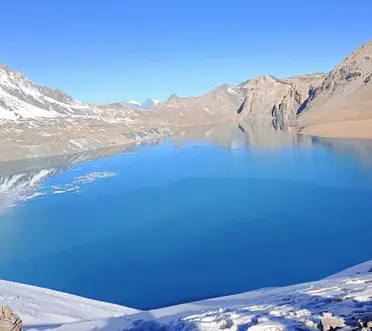
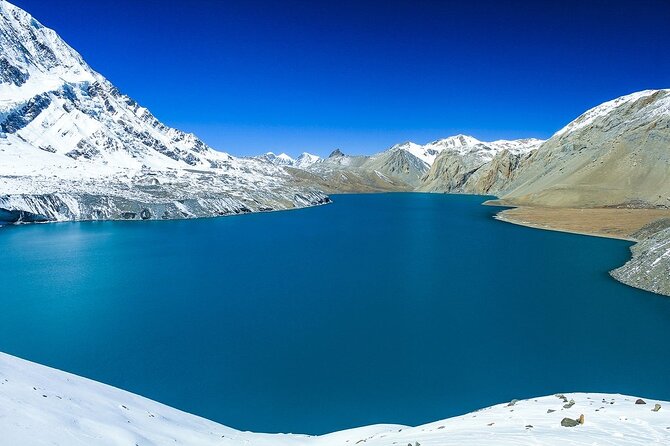
Tilicho Lake is a lake located in the Manang district of Nepal at an altitude of 4,919 metres (16,138 ft). Tilicho Lake is the destination of one of the most popular side hikes of the Annapurna Circuit trek. After a full day jeep drive passing through bumpy lane and holding the beauty of Besisahar, the Annapurna Circuit with Tilicho lake trek starts from small village “Tal”. Set a foot on all seven passes namely-Kuchurmo pass, Yarcha pass, Meta pass, Phu pass, Nar pass, Kangla pass, and the famous Thorong la pass among which three passes are above 4600 meter and four passes above 5,000 meters. In addition to this, exploring the multifarious villages, heart-warming cultures, flora and fauna, experiencing the optimum solidarity makes this trail unique than any other.
Annapurna Circuit with Tilicho Lake
The off lying trail leads to the glacial lake of mount Manaslu- The Donalake after moving through a dense forest. Following the Kuchumro Pass and Yarcha Pass, the trek aheads to the villages namely Phu and Nar. This village represents ancient Tibetan atmosphere, only few trekkers explore it. Walking through this trial also provides an opportunity to uncover the restricted area of Nar Phu valley with the special permit of seven days validity. The way travelled by a few and seeing the magnificent mountains, rarest animals, flowers, culture, villages itself is a wonderful thing to come across with amazing trekking experience.
Kangla Phedi to Manang: Yaks, Monasteries & Himalayan Giants
Taking a steps further towards Kangla Phedi(4530m/14858ft) the trial adjoins with Nagwal/the Annapurna circuit and ascends to Manang district. this area presents the view of cultivation fields with terraces, herding of yaks, culturally predominant gompas & monasteries, a view of Gangapurna lake, Gangapurna glacier resting just above the village,world highest mountain pass (ThorangLaa Pass), the view of the striking Annapurna Massif, Mt. Dhaulagauri, Mt Machhapuchhre, Mt Manaslu and many other snow-capped peaks that cannot be pass over.
Muktinath, Jomsom & Hidden Himalayan Trails
In addition, spend good time at the holy temple Muktinath (one of the world’s highest temple), the astonishing place Jomsom that has so many captivating places to take note upon. Make a scenic mountainous flight towards Pokhara which is totally optional with bus driving. Annapurna seven passes route is mostly designed for the trekkers who wants to explore most of the rarest places and are in search of something very unique to connect own self with nature.
Few Thing To Know Before Your Trip
It’s a tough but amazing trek! You’ll be walking long days, climbing high passes, and sometimes facing steep trails. Pace yourself—you’ll thank yourself later.
- Altitude matters. Thorong La Pass (5,416m) and Tilicho Lake (~4,919m) are high. Drink plenty of water, take breaks, and listen to your body.
- Weather is unpredictable. Snow, rain, or sudden storms can happen even in the best season. Warm layers and waterproof gear are essential.
- Simple accommodations. Teahouses along the trail are cozy but basic. Don’t expect luxury—think shared rooms and hearty local meals.
- Safety first. Trails can be tricky in parts. A licensed guide is highly recommended, especially if it’s your first big Himalayan trek.
- Respect the locals and nature. Annapurna is home to Himalayan communities and sacred sites. Be mindful, leave no trace, and enjoy the culture.
- Prepare well. Good fitness and some prior trekking experience make the journey smoother and more enjoyable.
Detail Itinerary
DAY 01 Arrival in Kathmandu and transfer to Hotel.
Duration: Approx. 20-30 minutes drive
Distance: Approx. 7 km
Meals:BB/ Full Board
Max Altitude:Kathmandu (1,400 m/4,592 ft)
Accommodation:Hotel
Our company representative will welcome you at Tribhuwan International Airport and drive you by private vehicle to hotel. Preparation and briefing about the trip.
Day 02 Drive from Kathmandu to Dharapani.
Duration: Approx. 10-12 hrs drive.
Distance: Approx. 200 km
Meals:BB/ Full Board
Max Altitude:Dharapani (1,900 m/6,200 ft)
Accommodation:Teahouses/ Lodges
After an early morning breakfast, we begin our scenic journey towards Dharapani. Along the way, you’ll enjoy views of lush green hills, cascading waterfalls, and the deep Marsyangdi River gorge. The drive offers glimpses of rural Nepalese life and terraced farming landscapes. Overnight stay at a basic yet comfortable lodge in Dharapani.
DAY 03 Trek from Dharapani to Chame.
Duration: Approx. 5-6 hrs trek
Distance: Approx. 13 km
Meals:BB/ Full Board
Max Altitude:Chame (2,713 m/ 8,898 ft).
Accommodation:Teahouses/ Lodges
After breakfast, our trek begins. We pass through charming villages like Bagarchhap, Danakyu, and Timang. Today’s trail offers spectacular views of snow-capped peaks such as Lamjung Himal. Walk through beautiful pine and rhododendron forests with numerous waterfalls along the way. Chame, the headquarters of Manang District, lies on the banks of the Marsyangdi River, surrounded by dramatic cliffs and dense pine forests. This region is deeply influenced by Tibetan Buddhism. Overnight at a comfortable teahouse.
DAY 04 Trek from Chame to Pisang.
Duration: Approx. 5-6 hrs trek
Distance: Approx. 10 km
Meals:BB/ Full Board
Max Altitude:Pisang (3,185 m/10,446 ft)
Accommodation:Teahouses/ Lodges
After early breakfast, we cross a suspension bridge and follow the Marsyangdi River upstream. The trail winds through pine forests, wildflowers, and scenic landscapes. Enjoy stunning views of Annapurna II and Pisang Peak along the way. As you ascend, you’ll notice Tibetan chortens and prayer flags lining the route. Upper Pisang, located on a ridge, offers panoramic views of Annapurna II, Annapurna IV, and the Marsyangdi Valley. Overnight stay in Upper Pisang.
DAY 05 Trek from Upper Pisang to Manang via Ghyaru and Nawal.
Duration: Approx. 5-6 hrs trek
Distance: Approx. 14 km
Meals:BB/ Full Board
Max Altitude:Manang (3,551 m/11,647 ft)
Accommodation:Teahouses/ Lodges
After breakfast, we start a steep uphill climb past mani walls and chortens to reach Ghyaru. This section is tough but rewards you with spectacular panoramic views of the Annapurna range. After 1–2 hours of walking from Ghyaru, we arrive in Nawal—a picturesque open village with an ancient monastery and a perfect lunch spot. From here, we walk through pine forests and yak pastures before reaching the beautiful town of Manang. Overnight in Manang.
DAY 06 Rest and acclimatisation at Manang.
Meals:BB/ Full Board
Max Altitude:Manang (3,551 m/ 11,647f t)
Accommodation:Teahouses/ Lodges
Manang, nestled along the Marsyangdi Valley, is the perfect place for acclimatization. Today, you can choose from several side trips:
- Gangapurna Lake and Glacier Viewpoint – About 1 hour.Ice Lake (Kicho Tal) – 6 to 7 hours round trip, offering breathtaking high-altitude mountain views.
- Milarepa Cave – A sacred site with historical significance, about 3 to 4 hours round trip.
- Explore the local monasteries, bakeries, and enjoy a relaxed day before heading to higher elevations. Overnight in Manang.
DAY 07 Trek from Manang to Shree Kharka.
Duration: Approx. 4-5 hrs trek
Distance: Approx. 7 km
Meals:BB/ Full Board
Max Altitude:Shree Kharka (4,050 m/ 13,287 ft).
Accommodation:Teahouses/ Lodges
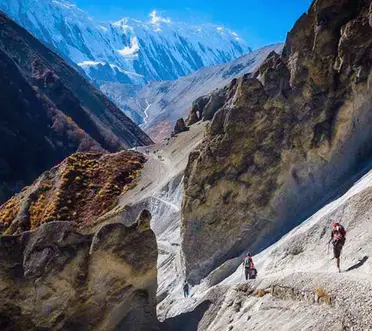
After breakfast, we leave the main Annapurna trail and take the scenic path toward Tilicho Lake. The trail is gradual but beautiful, offering views of Annapurna III and Gangapurna. The landscape transitions to alpine terrain with fewer trees and more rugged beauty. Overnight at a teahouse in Shree Kharka.
DAY 08 Trek from Shree Kharka to Yak Khara.
Duration: Approx. 4-5 hrs trek
Distance: Approx. 7km
Meals:BB/ Full Board
Max Altitude:Yak Kharka (4,110 m/13,484 ft)
Accommodation:Teahouses/ Lodges
The landscape becomes more alpine and sparse. Overnight at a teahouse in Yak Kharka.
DAY 09 Trek from Yak Kharka to Thorang Phedi
Duration: Approx. 3-4 hrs trek
Distance: Approx. 9.1 km
Meals:BB/ Full Board
Max Altitude:Thorong Phedi (4,600 m/15,092 ft)
Accommodation:Teahouses/ Lodges
We will gradual ascent through alphine landscapes passing leder, metal bridges etc and we will reach Thorang phedi after 3-4 hrs walk.
DAY 10 Cross Thorong La Pass, Trek to Muktinath.
Duration: Approx. 7-8 hrs trek
Distance: Approx. 16 km
Meals:BB/ Full Board
Max Altitude:Thorang La pass(5,416 m/ 17,769 ft) Muktinath (3,760 m/12,335 ft)
Accommodation:Teahouses/ Lodges
Today is the most challenging and rewarding day of the Annapurna Circuit. We begin early morning with a steep ascent to Thorong La Pass (5,416m)—the highest point on the trek. The top is marked by prayer flags and offers sweeping views of the Himalayas. From here, we descend steeply to Muktinath, a sacred pilgrimage site for both Hindus and Buddhists, known for its eternal flame and 108 water spouts. Muktinath has good accommodation options with hearty meals. Overnight in Muktinath
DAY 11 Drive from Muktinath to Pokhara.
Duration: Approx. 8-9hrs trek
Distance: Approx. 170 km
Meals:BB/ Full Board
Max Altitude:Pokhara (822 m/ 3947 Ft)
Accommodation:Hotel
After breakfast, we begin a long but scenic drive to Pokhara. The road is rugged and bumpy, especially between Muktinath and Beni, but it offers stunning views of the Kali Gandaki Gorge, the deepest gorge in the world. After reaching Pokhara, relax and enjoy a comfortable overnight stay at a hotel.
DAY 12 Explore Pokhara.
Meals:BB/ Full Board
Max Altitude:Pokhara (822 m/ 3947 Ft)
Accommodation:Hotel
Spend the day exploring the beautiful lakeside city of Pokhara. Visit popular attractions such as:
- Devi’s Fall
- Gupteshwor Cave
- Pumdikot Shiva Statue
- World Peace Pagoda
- Boating on Phewa Lake
Pokhara offers a relaxing atmosphere and is the perfect place to unwind after a long trek.
DAY 13 Drive or fly back to Kathmandu.
Duration: Approx. 7-8 hrs drive / 20-30 minutes Flight
Distance: Approx. 200 km
Meals:BB/ Full Board
Max Altitude:Kathmandu (1,400 m/4,592 ft)
Accommodation:Hotel
After breakfast, you can either take a tourist bus (approx. 7–8 hours) or a short 25-minute flight back to Kathmandu. Enjoy scenic views of rivers, terraced fields, and villages during the drive. Upon arrival, transfer to your hotel and relax.
DAY 14 Farewell, departure transfer to airport as per flight schedule.
Duration: Approx. 20-30 minutes drive
Distance: Approx. 7 km
Meals: BB/ Full Board
Max Altitude: Tribhuvan Internation Airport (1,338 m/4390 ft)
Our representative will drop you at International Airport as per your flight schedule.
Equipment Checklist
Embarking on the Annapurna Circuit with Tilicho Lake is a thrilling adventure that requires meticulous preparation. Ensuring you have the right gear can make the difference between a comfortable journey and a challenging one. In this guide, we’ll walk you through the essential equipment needed for the trek, from clothing layers to personal items. Whether you’re a seasoned trekker or a first-timer, our comprehensive packing list will help you get ready for the adventure of a lifetime.
1. Clothing
Base Layers: Thermal tops and bottoms for warmth.
Mid Layers: Fleece jacket for insulation.
Outer Layer: Insulated down jacket (recommended for high altitudes).
Rainproof/Windproof Jacket and Pants: Essential for unpredictable weather.
Trekking Pants: Lightweight, quick-drying pants for daytime trekking.
Warm Hat and Sun Hat: A warm beanie for cold weather, and a wide-brimmed hat or cap for sun protection.
Gloves: Waterproof insulated gloves and lightweight inner gloves.
Socks: Wool socks for cold weather and moisture-wicking socks for trekking.
Gaiters: To keep mud, snow, and debris out of your boots.
2. Footwear
Hiking Boots: Sturdy, waterproof boots with good ankle support.
Camp Shoes/Sandals: For comfort when relaxing in the tea houses or lodges.
3. Sleeping Gear
Sleeping Bag: Rated for -10°C to -20°C to withstand cold nights in higher altitudes.
Sleeping Bag Liner: Adds warmth and keeps your sleeping bag clean.
4. Backpack and Accessories
Daypack (25-30 liters): For carrying essentials like water, snacks, and layers.
Duffel Bag: Large, durable bag for porters to carry; waterproof covers are recommended.
Rain Cover: For protecting your daypack from rain.
Trekking Poles: Helpful for stability and reducing stress on knees.
5. Hydration and Nutrition
Water Bottles and/or Hydration Bladder: With at least 2-3 liters capacity.
Water Purification Tablets or Filter: To treat water on the trail.
Snacks: High-energy snacks like energy bars, nuts, and chocolates.
6. Personal and Miscellaneous Items
Headlamp with Extra Batteries: Essential for early morning treks or dark trails.
Sunglasses: UV-protective, high-quality sunglasses to protect against the intense high-altitude sun.
Sunscreen and Lip Balm: High SPF for sun protection.
Basic First Aid Kit: Include band-aids, blister treatment, antiseptics, painkillers, altitude sickness medication, and any personal medications.
Toiletries: Eco-friendly soap, toilet paper, hand sanitizer, and wet wipes.
Camera and Extra Batteries: Since charging can be costly and unreliable at high altitudes.
7. Documents and Money
Passport and Permits: Passport, visa,TIMS card, and entry permit.
Cash: ATMs are not reliable in the mountains, so bring enough Nepali cash for personal expenses.
Frequently Asked Questions
It’s a classic Himalayan adventure combining the Annapurna Circuit with a visit to Tilicho Lake, one of the highest lakes in the world. Expect stunning mountains, deep valleys, high passes, and alpine lakes.
It’s moderate to challenging. If you’re reasonably fit and comfortable trekking 5–7 hours a day, you can enjoy it. Some previous trekking experience helps but isn’t mandatory.
You’ll cross Thorong La Pass (5,416m) and reach Tilicho Lake (~4,919m). Mild altitude sickness is possible. Walk slowly, hydrate, and listen to your body.
Yes. A licensed guide is recommended for safety, navigation, and permits. The region is popular but some remote areas require local guidance.
Teahouses are basic but cozy. Expect shared rooms, hearty local meals, and rustic charm. Some sections are more isolated, so carry essentials.
Spring (Mar–May) and Autumn (Sep–Nov) offer clear skies, comfortable temperatures, and safe trail conditions.
Average 10–15 km per day, with longer and shorter days depending on terrain and acclimatization needs.
Yes, especially at Thorong La Pass. Tilicho Lake may have ice depending on the season. Proper gear is essential.
Tilicho Lake — breathtaking alpine beauty
Thorong La Pass — challenging high-altitude crossing
Diverse landscapes — villages, rivers, cliffs, and Himalayan panoramas
Cultural experiences — traditional villages and local communities
Follow your guide’s instructions
Take altitude seriously
Pack warm and waterproof gear
Respect local culture and trails
It’s a perfect balance of adventure and pace—enough time to cross high passes, visit Tilicho Lake, and enjoy the Annapurna Circuit scenery without rushing.
All the equipment/accessories required for trekking will be arranged for you.You will have to pay the amount for equipment. If you personally want to manage any equipment by yourself it’s fine. We have created The Ultimate Trekking Checklist page for your help as It is always better to carry the essential gears and accessories.
On the Annapurna Circuit plus Tilicho Lake route, online access fades fast – paths lead deep into isolated hamlets and rugged heights where signals barely cling. Larger lodges near spots such as Manang, Muktinath, or Chame might serve up sluggish Wi-Fi, typically behind a minor payment wall. Cellular reach from providers like Ncell or Nepal Telecom stutters between weak 2G and fleeting 3G bursts. Preload navigation tools, reading material, and trail insights before heading out – slowing down tech habits opens space to feel the raw alpine air, still glacial waters, and quiet ridgelines more fully. Reconnection returns gradually upon reaching urban hubs like Pokhara or Kathmandu.
Yes!! You can charge mobile phones and camera batteries during the trek. At most of the places you will get to charge for free but at some places you have to pay some amount to charge. Remember that it is always better to bring your power bank with you which will be helpful.
No supplemental oxygen required on the Annapurna Circuit including Tilicho Lake – elevation peaks at Thorong La Pass, 5,416 meters, plus the lake itself hovering near 4,919. These heights challenge the body, yet most travelers adapt well given gradual ascent. Moving slow matters more than speed, each step building resilience when paired with consistent hydration. Watch how your body responds instead of pushing through discomfort – one sign of strain means pause, reassess. Rest stretches in Manang or by the lake shore tune recovery far better than artificial aids ever could. Oxygen support stays reserved for crises, not standard trail routines.
Qualified, well experienced, knowledgeable and reliable trekking leaders who have been working in this field professionally for more than a decade will guide you toward the destination and back. You are in safe hands with us, so don’t worry about trekking guides.
Yes!! It is recommended to have travel insurance during the trek. It is uncertain that you will not feel sick or get into any accidents during the trek. So, for medical emergencies or as precaution against risks and financial losses that could happen while traveling, insurance is best.
We hire our staffs according to their standards. They should have to go through our selection procedure on which we will check their certifications, qualifications and experience. Hence, our staffs are equipped/trained and insured.
Altitude sickness might show up during this journey, particularly when moving upward toward Thorong La Pass (5,416m) or arriving at Tilicho Lake (~4,919m). Some travelers, no matter how fit, still experience light effects – headaches, an upset stomach, or feeling unbalanced. Moving gradually helps a lot, along with drinking enough water, eating regular meals, while allowing your system to adjust; that’s precisely why pauses in spots such as Manang make sense. Pay attention to what your body tells you: should things intensify, avoid pushing forward, instead consider heading lower. Keep in mind, though it happens often, most cases respond well when handled wisely ahead of time.
Didn't we answer your questions? Visit our help center.
Cancellations
Full refund if cancelled 15 days prior; 50% refund if cancelled 8–14 days prior; no refund if cancelled within 7 days due to finalized arrangements. Cancellations to be made in writing (email/message); in cases of severe weather, natural events, or government restrictions, tours may be rescheduled/credited for future use; travel insurance is recommended.
Read more terms & conditions